Amazon £6.00 or £5.00 if ordered through Chris Ensor
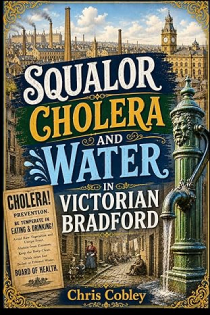
Bradford was the fastest-growing of Britain’s cities during the nineteenth century. This led to appalling problems of overcrowding and infection. Typhoid, typhus, tuberculosis, smallpox, scarlet fever and influenza all ravaged the city. When cholera arrived, it also devastated the poorest areas of the community.
But Bradford was always conscious of the need for more water, both for its population and for its many mills. Slowly, systems to meet that need were developed, mainly through the extensive building of new reservoirs throughout the valleys of the West Riding, drawing water from its several rivers.
Meanwhile, at a national level, the central government was reforming the nature of local government and giving it additional responsibilities. The key player here was Edwin Chadwick, controversial but effective. No less effective, but largely disbelieved, was John Snow in making the connection between infected water and the spread of cholera.
Fortunately, by the end of the nineteenth century, cholera had receded nationally, and the supply of fresh, uncontaminated water in Bradford had greatly expanded. Cholera was no more the terror it had been for so long.